


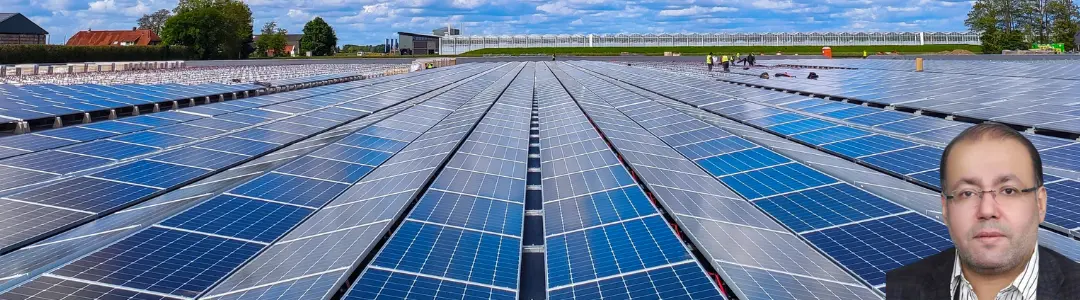
Punjab Government plans to kickstart Local manufacturing of solar panels
In Pakistan, the use of solar power is gradually increasing. The Punjab provincial government has decided to start local manufacturing of solar panels. Pakistan largely depends on local manufacturers and Chinese imports for solar panels. Local manufacturing will help reduce electricity bills.
Minister of Industry and Commerce Shafi Hussain has expressed his intention to take a positive initiative toward the local production of solar panels in Pakistan to meet the country’s growing energy needs and reduce dependence on Independent Power Producers (IPPs).
Chinese solar panel manufacturing companies have shown a keen interest in investing in Punjab’s solar energy sector. The minister further stated that the Punjab government will fully facilitate all these companies. Local production will lead to lower solar panel prices, benefiting not only industries but also the common people. By using Solar panels, consumer remain in protected category of Electricity consumers
He also elaborated that the government is formulating a comprehensive and long-term policy regarding solar energy production. This policy aims to increase the domestic production of solar panels in Pakistan. With investments from Chinese companies, Pakistan’s economic situation is expected to receive a positive boost.
Solar panel Local Manufacturing Policy
The federal government has drafted a policy for the next ten years titled “Solar Panel Local Manufacturing and Allied Equipment.” This policy not only provides additional perks to manufacturers but also promotes local sales by imposing tariffs on the import of solar panels and equipment.
Roadmap for Local Manufacturing of Solar Panels
In the roadmaps, discussions encompass various aspects, including
Production Capacity targets
The manufacturing companies have been assigned a target to increase production from 1 gigawatt to 10 gigawatts within the first 5 years. According to this policy roadmap, companies are expected to ramp up local manufacturing of solar panels to a level where Pakistan can generate solar power ranging from 1 GW to 10 GW.
Export and Local Sales Ratio Goal
Here, you can easily check the sales ratio goal for the local manufacturing of solar panels or plates as follows:
| Year | Export | Local Sale |
|---|---|---|
| 1st year | 50 percent | 50 percent |
| 2nd year | 60 percent | 40 percent |
| 3rd year | 70 percent | 30 percent |
| 4th year | 80 percent | 20 percent |
| 5th year | 90 percent | 10 percent |
| 6th year and onward | 10 percent increase every year | 10 percent per year |
Localization Percentage Per Year Objectives
The localization plan is also part of the roadmap and can be read as follows:
| Year | Localisation |
|---|---|
| 1st year | zero percent |
| 2nd year | 30 percent |
| 3rd year | 40 percent |
| 4th year | 50 percent |
| 5th year and onward | 10 percent increase per year |
Minimum Investment Requirements for local manufacturing
The minimum investment for local manufacturing of solar plates will start from 10 million dollars in the first year, and then an increase of 10 million dollars each year will be required.
Tariffs on Finished Goods
In the first three years, tariffs imposed on finished goods will be 5 percent, 10 percent, and 15 percent. From the 4th year to the 10th year, it will be fixed at 15 percent every year for the local manufacturing of solar panels.
Bank Guarantee
The bank statement provided by investors should be at least equivalent to the tariff imposed and the exemption of taxes.